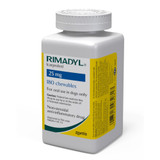







Product details
Rimadyl (carprofen) is indicated for the relief of pain and inflammation associated with osteoarthritis and for the control of postoperative pain associated with soft tissue and orthopedic surgeries in dogs.
This product is a Caplet formulation (not Chewable Tablets).
- Rimadyl is a Choice Backed by Confidence: Rimadyl was the first FDA-approved nonsteroidal anti-inflammatory drug (NSAID) for dogs and is the most widely recognized & preferred name-brand non-steroidal anti-inflammatory drug (NSAID) by veterinarians.1 Over 29 million dogs have been treated with Rimadyl.2
- Rimadyl Helps Dogs Get Back to Their Lovable Selves3: Rimadyl is such an effective treatment, after just two weeks dogs in a study showed visual improvements in energy, happiness, activity level, comfort.3 You might think it’s OK to stop when you see your dog is feeling better, but OA is a painful, progressive disease, so it's important to stick with your veterinarian’s prescribed course.
- Safe for Long-Term Use: Long-term treatment can provide continuous improvement in your dog’s OA pain and mobility. Your dog can stay involved in the activities you love to do together. Studies have shown that continuous use of Rimadyl over the long term has been found to be safe.4,5
- Dosing & Administration: Rimadyl should be given according to your veterinarian’s instructions. Your veterinarian will tell you what amount of Rimadyl is right for your dog and for how long it should be given. Most dogs will take Rimadyl Chewable Tablets right out of your hand or the caplet can be placed in the mouth. Rimadyl may be given with or without food.
- Conveniently Offered in Two Forms: Rimadyl is available in both caplet and in chewable tablet form. Talk to your vet about which is best for your dog. Rimadyl Chewables are palatable liver-flavor designed to taste good to dogs. Keep Rimadyl Chewable Tablets in a secured storage area out of reach of your dog and other pets.
Rimadyl (carprofen) is the first FDA-approved NSAID (nonsteroidal anti-inflammatory drug) for the relief of pain and inflammation associated with osteoarthritis in dogs. Rimadyl works by blocking the production of certain body chemicals that cause inflammation. The nonsteroidal anti-inflammatory properties work to reduce joint inflammation while the analgesic properties work to reduce pain. Rimadyl has a history of trusted pain relief for dogs and is the most widely recognized & preferred name-brand non-steroidal anti-inflammatory drug (NSAID) by veterinarians.1
Rimadyl is backed by over 25 years of Zoetis’ research and innovation in OA pain with 29 million dogs treated.2 Rimadyl keeps your dog happy and active with improved mobility. Taking Rimadyl at the recommended dose made it easier for dogs to do the activities they love most.6 After just 2 weeks on Rimadyl, dogs in a study showed visible improvements in energy, happiness, activity level, and comfort3 with continuous daily treatment at the label dose. You might think it’s OK to stop when you see your dog is feeling better, but OA is a painful, progressive disease, so it's important to stick with your veterinarian’s prescribed course. Your dog's pain can worsen if you stop treatment earlier than prescribed.7 Studies have shown that long-term treatment provides continuous improvement in your dog’s OA pain and mobility.
Rimadyl is also eligible for Zoetis Petcare Rewards Program. Enroll today for free to earn points on every dollar spent on eligible purchases that can be redeemed for services at your vet. Available by prescription only. Ask your vet if Rimadyl is right for your dog. Save with convenient automatic deliveries for peace of mind that your dog doesn’t miss a dose.
References:
1. ZMR: Kynetec 2023 Brand Equity Scorecard: OA Pain, July 2023 TI-10484
2. ZMR: Zoetis Petcare BIAHP-288 September 2020 TI-04179
3. Reid, J., et al., Measuring Chronic Pain in Osteoarthritic Dogs Treated Long-Term with Carprofen, through its Impact on Health-Related Quality of Life. In Proceedings: Veterinary and Comparative Orthopedics and Traumatology, 31(S-1). 2018. AR-07068
4. Freedom of Information Summary. [S/NADA 141-111] – [RIMADYL (Carprofen). United States Food and Drug Administration. 2021 TI-03698
5. Autefage A, et al. Efficacy and safety of the long-term oral administration of carprofen in the treatment of osteoarthritis in dogs. Revue de Médecine Vétérinaire. 2007;158(3):119-127. AR-00946
6. Reid, J., et al., Measuring Chronic Pain in Osteoarthritic Dogs Treated Long-Term with Carprofen, through its Impact on Health-Related Quality of Life, Vet Comp Orthop Traumatol, 2018. AR-07068
7. Belshaw Z, et al. Could it be osteoarthritis? How dog owners and veterinary surgeons describe identifying canine osteoarthritis in a general practice setting. Preventive Veterinary Medicine. 2020;185. doi:10.1016/j.prevetmed.2020.105198 AR-15503
*Please note: The images provided are for illustrative purposes. Your product may be delivered in a Vetsource Pharmacy vial; product packaging & appearance may vary and are subject to manufacturer availability.
Product sourced directly from the manufacturer or their approved distributor. Guaranteed genuine product backed by the manufacturer.
For
Dogs
Active ingredient(s)
Carprofen
Inactive ingredients
Complete inactive ingredients list not provided by manufacturer.
Brand name
Rimadyl Caplets
Drug class
Nonsteroidal anti-inflammatory drug
Manufacturer
Zoetis
Product strength & size
Rimadyl Caplets may be available in multiple strengths and/or sizes. Please ensure the selected product and package size are appropriate for your pet, as recommended by your veterinarian.
For current availability, please refer to the product selection above.
Usage
*For complete product information, please review the full prescribing information in the manufacturer package insert.
Rimadyl Caplets should be given orally as directed by your veterinarian. Please consult your veterinarian before making any changes or discontinuing the prescribed dosing schedule.
This medication can be given with or without food. If your pet vomits or appears unwell after receiving a dose on an empty stomach, give future doses with food or a small treat. If vomiting continues, contact your veterinarian.
Ensure your pet always has access to fresh, clean drinking water while taking this medication.
Your veterinarian may require bloodwork/laboratory monitoring prior to starting, then periodically while taking this medication. Do not miss any follow-up visits.
Missed doses
Administer the dose as soon as possible. If it is almost time for the next dose, skip the missed dose and continue with the regular schedule. Do not give more medication than prescribed or two doses at once.
Storage
Store in a cool, dry place at a controlled room temperature (59-86°F). Keep in a secure location out of the reach of children and pets. Protect from light and moisture.
Exposure to extreme temperatures or moisture may affect the integrity and effectiveness of medications. Always store medications properly (e.g., away from the bathroom, kitchen sink, or other damp places).
Side effects
This medication is typically well tolerated in dogs, and side effects are considered uncommon. The most common side effects of this medication are mild gastrointestinal effects (e.g., vomiting, diarrhea, or constipation), a mild increase or decrease in appetite, and lethargy.
In rare cases, serious adverse effects including gastrointestinal ulceration and kidney or liver issues can develop.
Contact your veterinarian immediately if your pet has complete loss of appetite; extreme fatigue, weakness, or lack of coordination; seizures; extreme behavioral changes (e.g., aggression); significant changes in activity/energy level, urinary habits, or fluid intake; vomiting that is severe, appears bloody, or has a “coffee grounds” appearance; black, tarry, or bloody stools; skin issues, including lesions and itching; or if you notice yellowing of the skin, gums, or whites of the eyes.
Notify your veterinarian if your pet experiences any of the effects described above, or if you notice any other side effects that are persistent or troublesome.
If you notice anything unusual, please consult your veterinarian.
Precautions
*For complete product information including warnings and precautions, please refer to the manufacturer package insert.
For oral use in dogs only—not for use in humans. Do NOT use in cats.
Do NOT administer to animals that are not eating normally, that have active GI ulcers or bleeding, or those taking other anti-inflammatory medications (e.g., other NSAIDs, corticosteroids).
Use with caution in geriatric dogs and puppies younger than 6 weeks old. Caution should also be exercised in animals with a history of GI ulcers; current issues with vomiting, diarrhea, and/or hydration; heart, kidney, or liver disease; and in animals that have a predisposition to excessive bleeding (or that are taking an anticoagulant).
Safe use of this medication has not been established and should be used with caution in breeding, pregnant, or lactating animals. Discuss the risks of using this medication with your veterinarian if your pet is in one of these groups.
Do not administer to animals with a known history or suspected allergy/hypersensitivity to any NSAID, including this medication or any of its ingredients. Allergic reactions to medications may occur. Be sure to inform Vetsource and your veterinarian if your pet has any known drug sensitivities or allergies.
If your pet displays symptoms of an allergic reaction, discontinue therapy and call your veterinarian immediately or seek emergency veterinary attention. Symptoms may include (but are not limited to): swollen lips, tongue, face, or airways; difficulty breathing; agitation; profuse salivation; and widespread hives or itching.
Drug and food interactions
The following drugs* may have potential interactions with this medication:
anticoagulants (e.g., heparins, rivaroxaban, warfarin), antidiabetic agents (including insulins), beta blockers (e.g., atenolol, sotalol), bisphosphonates (e.g., alendronate), blood pressure medications (e.g., enalapril, sildenafil, telmisartan), calcium channel blockers (e.g., amlodipine, diltiazem), clopidogrel, corticosteroids (e.g., dexamethasone, prednisone), cyclosporine, digoxin, diuretics (e.g., furosemide, hydrochlorothiazide, spironolactone), fluoroquinolone antibiotics (e.g., ciprofloxacin), methotrexate, concurrent NSAIDs, pentoxifylline, salicylates (e.g., aspirin, bismuth subsalicylate), SSRIs (e.g., fluoxetine, sertraline), toceranib (Palladia), and tricyclic antidepressants (e.g., amitriptyline, clomipramine).
*NOTE: this may not be a comprehensive list. Contact your veterinarian if your pet experiences any unusual reactions when different medications are given together.
Please ensure your veterinarian is aware of all medications and supplements that your pet is currently receiving. Your veterinarian may prescribe multiple medications, even if a potential drug interaction may occur. In these instances, your veterinarian may adjust the dosages or monitor your pet more closely.
Adverse reactions
If you are concerned that your pet has experienced an adverse reaction to this medication, please contact the manufacturer Zoetis at 1-888-963-8471 or Vetsource Pet Owner Care at 877-738-4443.
Overdose
If you have any reason to suspect an overdose, call your doctor/veterinarian or the appropriate poison control resource immediately.
For humans:
The national toll-free Poison Help line, 1-800-222-1222, will connect you to your local poison center in case of emergency. This service is available nationwide and in most U.S. territories.
For animals:
The ASPCA Animal Poison Control Center is available 24 hours a day, 365 days a year at 888-426-4435.
Pet Poison Helpline® also provides a 24/7 animal poison control service at 855-764-7661.
*Please note: this information is for third-party services and is provided for convenience in case of potential poison-related emergencies. There may be consultation fee for these services.
Disclaimer
The content provided on this page is NOT medical advice.
All content, including the images and product description above, is intended for general informational purposes only and should not be considered a substitute for professional veterinary consultation, diagnosis, or treatment.
Consult your veterinarian for complete information about this product and how it fits into your pet's individual treatment plan.
Last revised: 12/02/2025
-
Description
Product detailsRimadyl (carprofen) is indicated for the relief of pain and inflammation associated with osteoarthritis and for the control of postoperative pain associated with soft tissue and orthopedic surgeries in dogs. This product is a Caplet formulation (not Chewable Tablets).- Rimadyl is a Choice Backed by Confidence: Rimadyl was the first FDA-approved nonsteroidal anti-inflammatory drug (NSAID) for dogs and is the most widely recognized & preferred name-brand non-steroidal anti-inflammatory drug (NSAID) by veterinarians.1 Over 29 million dogs have been treated with Rimadyl.2
- Rimadyl Helps Dogs Get Back to Their Lovable Selves3: Rimadyl is such an effective treatment, after just two weeks dogs in a study showed visual improvements in energy, happiness, activity level, comfort.3 You might think it’s OK to stop when you see your dog is feeling better, but OA is a painful, progressive disease, so it's important to stick with your veterinarian’s prescribed course.
- Safe for Long-Term Use: Long-term treatment can provide continuous improvement in your dog’s OA pain and mobility. Your dog can stay involved in the activities you love to do together. Studies have shown that continuous use of Rimadyl over the long term has been found to be safe.4,5
- Dosing & Administration: Rimadyl should be given according to your veterinarian’s instructions. Your veterinarian will tell you what amount of Rimadyl is right for your dog and for how long it should be given. Most dogs will take Rimadyl Chewable Tablets right out of your hand or the caplet can be placed in the mouth. Rimadyl may be given with or without food.
- Conveniently Offered in Two Forms: Rimadyl is available in both caplet and in chewable tablet form. Talk to your vet about which is best for your dog. Rimadyl Chewables are palatable liver-flavor designed to taste good to dogs. Keep Rimadyl Chewable Tablets in a secured storage area out of reach of your dog and other pets.
Rimadyl (carprofen) is the first FDA-approved NSAID (nonsteroidal anti-inflammatory drug) for the relief of pain and inflammation associated with osteoarthritis in dogs. Rimadyl works by blocking the production of certain body chemicals that cause inflammation. The nonsteroidal anti-inflammatory properties work to reduce joint inflammation while the analgesic properties work to reduce pain. Rimadyl has a history of trusted pain relief for dogs and is the most widely recognized & preferred name-brand non-steroidal anti-inflammatory drug (NSAID) by veterinarians.1Rimadyl is backed by over 25 years of Zoetis’ research and innovation in OA pain with 29 million dogs treated.2 Rimadyl keeps your dog happy and active with improved mobility. Taking Rimadyl at the recommended dose made it easier for dogs to do the activities they love most.6 After just 2 weeks on Rimadyl, dogs in a study showed visible improvements in energy, happiness, activity level, and comfort3 with continuous daily treatment at the label dose. You might think it’s OK to stop when you see your dog is feeling better, but OA is a painful, progressive disease, so it's important to stick with your veterinarian’s prescribed course. Your dog's pain can worsen if you stop treatment earlier than prescribed.7 Studies have shown that long-term treatment provides continuous improvement in your dog’s OA pain and mobility.Rimadyl is also eligible for Zoetis Petcare Rewards Program. Enroll today for free to earn points on every dollar spent on eligible purchases that can be redeemed for services at your vet. Available by prescription only. Ask your vet if Rimadyl is right for your dog. Save with convenient automatic deliveries for peace of mind that your dog doesn’t miss a dose.References:1. ZMR: Kynetec 2023 Brand Equity Scorecard: OA Pain, July 2023 TI-104842. ZMR: Zoetis Petcare BIAHP-288 September 2020 TI-041793. Reid, J., et al., Measuring Chronic Pain in Osteoarthritic Dogs Treated Long-Term with Carprofen, through its Impact on Health-Related Quality of Life. In Proceedings: Veterinary and Comparative Orthopedics and Traumatology, 31(S-1). 2018. AR-070684. Freedom of Information Summary. [S/NADA 141-111] – [RIMADYL (Carprofen). United States Food and Drug Administration. 2021 TI-036985. Autefage A, et al. Efficacy and safety of the long-term oral administration of carprofen in the treatment of osteoarthritis in dogs. Revue de Médecine Vétérinaire. 2007;158(3):119-127. AR-009466. Reid, J., et al., Measuring Chronic Pain in Osteoarthritic Dogs Treated Long-Term with Carprofen, through its Impact on Health-Related Quality of Life, Vet Comp Orthop Traumatol, 2018. AR-070687. Belshaw Z, et al. Could it be osteoarthritis? How dog owners and veterinary surgeons describe identifying canine osteoarthritis in a general practice setting. Preventive Veterinary Medicine. 2020;185. doi:10.1016/j.prevetmed.2020.105198 AR-15503*Please note: The images provided are for illustrative purposes. Your product may be delivered in a Vetsource Pharmacy vial; product packaging & appearance may vary and are subject to manufacturer availability.Product sourced directly from the manufacturer or their approved distributor. Guaranteed genuine product backed by the manufacturer.ForDogsActive ingredient(s)CarprofenInactive ingredientsComplete inactive ingredients list not provided by manufacturer.Brand nameRimadyl CapletsDrug classNonsteroidal anti-inflammatory drugManufacturerZoetisProduct strength & sizeRimadyl Caplets may be available in multiple strengths and/or sizes. Please ensure the selected product and package size are appropriate for your pet, as recommended by your veterinarian.For current availability, please refer to the product selection above.Usage*For complete product information, please review the full prescribing information in the manufacturer package insert.Rimadyl Caplets should be given orally as directed by your veterinarian. Please consult your veterinarian before making any changes or discontinuing the prescribed dosing schedule.This medication can be given with or without food. If your pet vomits or appears unwell after receiving a dose on an empty stomach, give future doses with food or a small treat. If vomiting continues, contact your veterinarian.Ensure your pet always has access to fresh, clean drinking water while taking this medication.Your veterinarian may require bloodwork/laboratory monitoring prior to starting, then periodically while taking this medication. Do not miss any follow-up visits.Missed dosesAdminister the dose as soon as possible. If it is almost time for the next dose, skip the missed dose and continue with the regular schedule. Do not give more medication than prescribed or two doses at once.StorageStore in a cool, dry place at a controlled room temperature (59-86°F). Keep in a secure location out of the reach of children and pets. Protect from light and moisture.Exposure to extreme temperatures or moisture may affect the integrity and effectiveness of medications. Always store medications properly (e.g., away from the bathroom, kitchen sink, or other damp places).Side effectsThis medication is typically well tolerated in dogs, and side effects are considered uncommon. The most common side effects of this medication are mild gastrointestinal effects (e.g., vomiting, diarrhea, or constipation), a mild increase or decrease in appetite, and lethargy.In rare cases, serious adverse effects including gastrointestinal ulceration and kidney or liver issues can develop.Contact your veterinarian immediately if your pet has complete loss of appetite; extreme fatigue, weakness, or lack of coordination; seizures; extreme behavioral changes (e.g., aggression); significant changes in activity/energy level, urinary habits, or fluid intake; vomiting that is severe, appears bloody, or has a “coffee grounds” appearance; black, tarry, or bloody stools; skin issues, including lesions and itching; or if you notice yellowing of the skin, gums, or whites of the eyes.Notify your veterinarian if your pet experiences any of the effects described above, or if you notice any other side effects that are persistent or troublesome.If you notice anything unusual, please consult your veterinarian.Precautions*For complete product information including warnings and precautions, please refer to the manufacturer package insert.For oral use in dogs only—not for use in humans. Do NOT use in cats.Do NOT administer to animals that are not eating normally, that have active GI ulcers or bleeding, or those taking other anti-inflammatory medications (e.g., other NSAIDs, corticosteroids).Use with caution in geriatric dogs and puppies younger than 6 weeks old. Caution should also be exercised in animals with a history of GI ulcers; current issues with vomiting, diarrhea, and/or hydration; heart, kidney, or liver disease; and in animals that have a predisposition to excessive bleeding (or that are taking an anticoagulant).Safe use of this medication has not been established and should be used with caution in breeding, pregnant, or lactating animals. Discuss the risks of using this medication with your veterinarian if your pet is in one of these groups.Do not administer to animals with a known history or suspected allergy/hypersensitivity to any NSAID, including this medication or any of its ingredients. Allergic reactions to medications may occur. Be sure to inform Vetsource and your veterinarian if your pet has any known drug sensitivities or allergies.If your pet displays symptoms of an allergic reaction, discontinue therapy and call your veterinarian immediately or seek emergency veterinary attention. Symptoms may include (but are not limited to): swollen lips, tongue, face, or airways; difficulty breathing; agitation; profuse salivation; and widespread hives or itching.Drug and food interactionsThe following drugs* may have potential interactions with this medication: anticoagulants (e.g., heparins, rivaroxaban, warfarin), antidiabetic agents (including insulins), beta blockers (e.g., atenolol, sotalol), bisphosphonates (e.g., alendronate), blood pressure medications (e.g., enalapril, sildenafil, telmisartan), calcium channel blockers (e.g., amlodipine, diltiazem), clopidogrel, corticosteroids (e.g., dexamethasone, prednisone), cyclosporine, digoxin, diuretics (e.g., furosemide, hydrochlorothiazide, spironolactone), fluoroquinolone antibiotics (e.g., ciprofloxacin), methotrexate, concurrent NSAIDs, pentoxifylline, salicylates (e.g., aspirin, bismuth subsalicylate), SSRIs (e.g., fluoxetine, sertraline), toceranib (Palladia), and tricyclic antidepressants (e.g., amitriptyline, clomipramine).*NOTE: this may not be a comprehensive list. Contact your veterinarian if your pet experiences any unusual reactions when different medications are given together.Please ensure your veterinarian is aware of all medications and supplements that your pet is currently receiving. Your veterinarian may prescribe multiple medications, even if a potential drug interaction may occur. In these instances, your veterinarian may adjust the dosages or monitor your pet more closely.Adverse reactionsIf you are concerned that your pet has experienced an adverse reaction to this medication, please contact the manufacturer Zoetis at 1-888-963-8471 or Vetsource Pet Owner Care at 877-738-4443.OverdoseIf you have any reason to suspect an overdose, call your doctor/veterinarian or the appropriate poison control resource immediately.For humans:The national toll-free Poison Help line, 1-800-222-1222, will connect you to your local poison center in case of emergency. This service is available nationwide and in most U.S. territories.For animals:The ASPCA Animal Poison Control Center is available 24 hours a day, 365 days a year at 888-426-4435.Pet Poison Helpline® also provides a 24/7 animal poison control service at 855-764-7661.*Please note: this information is for third-party services and is provided for convenience in case of potential poison-related emergencies. There may be consultation fee for these services.DisclaimerThe content provided on this page is NOT medical advice.All content, including the images and product description above, is intended for general informational purposes only and should not be considered a substitute for professional veterinary consultation, diagnosis, or treatment.Consult your veterinarian for complete information about this product and how it fits into your pet's individual treatment plan.Last revised: 12/02/2025 -
0 Reviews